Control and interaction engineering for a smart CO2 mosquito device
Sensing, heating and airflow need consistent control and diagnostics. Development covers hardware, firmware, LVGL interaction and telemetry tools; stage material and limited physical-unit records are available while whole-product iteration continues.
Project stageStage documentation and limited physical-unit records are available; hardware and whole-product development are still iterating
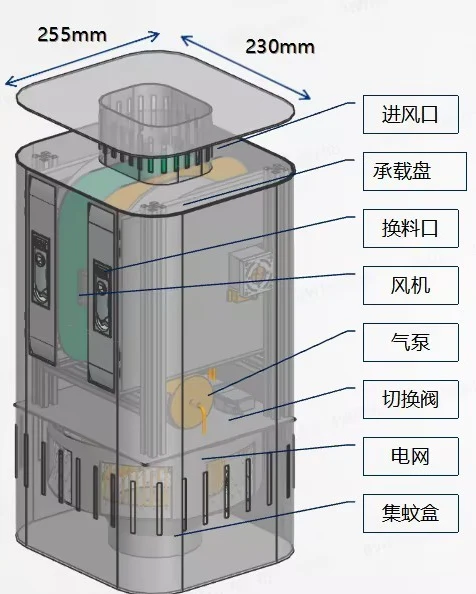
Early appearance and structure reference, shown to explain product form rather than the current prototype configuration.
Project overview
Product / platform
XMW002 environmental-control device
Technical foundation
GD32F470, FreeRTOS and LVGL
Engineering focus
Control outputs, state interaction, serial telemetry and issue regression
What the product needed to solve
CO2, temperature and other states require consistent acquisition, while heating, fans, UV and moving parts have different constraints. Requirements and communication material also vary by version.
Engineering approach
How the engineering work fits together
01
Coordinate UI and hardware outputs through one path
Organize actions through command queues, workflow state machines and control policies, with common output arbitration. Combine sensing and workflow state into a consistent snapshot for display, queries and diagnostics.
02
Create observable integration workflows first
Use serial queries, live telemetry and bench data to observe temperature, concentration, outputs and control phases. Offline UI rendering and key checks distinguish demonstration data, reserved elements and physical-unit results.
03
Turn field issues into repeatable regression scenarios
For a historical preheating transition issue, consider concentration and temperature together and include related scenarios in offline regression. Actual flow, thermal behavior and loaded operation still require validation against the hardware version.
Engineering evidence
See the material, its purpose and the limits of what it demonstrates
Offline program-interface rendering
Offline rendering of the actual LVGL program using demonstration data; reserved icons do not establish acceptance of the corresponding functions.
Displayed values and states demonstrate the interface only; they are not measured concentration, runtime, trapping effectiveness or whole-product performance.
What the project has produced
Hardware and layered-firmware material
Hardware and interface designs, with firmware for control, state management and device protection.
Interaction and maintenance tooling
LVGL interfaces, serial queries, telemetry and maintenance tools, and a staged delivery structure.
Issue and regression material
Offline regression material for control, telemetry and supervision modules, alongside limited physical-unit records and open items.
Engineering foundation
The project produced hardware and firmware material, an LVGL interface, serial and telemetry tools and a staged delivery structure, with offline assertions retained for control, telemetry and supervision modules.
Validation scope and limits
PCB routing, DRC and dedicated review remain for the current hardware revision. Some interlocks, real-flow and thermal calibration, and formal whole-product acceptance are still open.
This case presents project materials and stage outcomes. Deliverables, test conditions and acceptance scope are confirmed for the agreed project version.